Steroids...Why We're Better Than That
For starters, we're honest.
-
Poster Profile:
Name: Oliver
Email: oliver@fasttwitchfp.com
Age: 27
Location: Apollo Beach, FL
Position: Trainer
Sign: Leo
Bio:College educated in communication, certified through the National Strength and Conditioning Association, highly experienced and accomplished in fitness/performance training and ready to make everything on your body better.
by: Oliver posted: December 12, 2011
What comes to mind when you think of steroids? Big, unnatural-looking muscles I’m sure. We all know Barry Bonds and Mark McGuire used steroids to hit farther than any other baseball players, and we know Arnold Schwarzenegger used steroids to get huge back in the day. Steroids are a dangerous and illegal substance, and yet, like pot, it seems like everyone has easy access to it if they want it. Just step into any “big box” gym and you’ll see humongous human beings walking around doing partner-assisted curls and crunches using a cable machine. Then they might jump on the leg extension machine and do a couple sets, and their legs will look like they are about to explode they’re so big.
Other non-steroid using gym members may see these guys training and think that they can mimic the results by doing the same exercises with the same reckless abandon. They may figure it out sooner or later but eventually they’ll see that something vital is missing, because they’re not getting bigger or stronger, even though they’re doing the same things the huge guy is doing.
This is the frustration that many have felt over the years, and since most people don’t know how to train properly they think that the only way to make progress is through the use of steroids. It’s an unfortunate fact, but many believe they just can’t build muscle, that they’re bodies will just resist any attempt to increase lean mass and get stronger. The truth is, you just need to hire a decent trainer, and the guy who looks like he is on steroids is probably not a decent trainer. I could be wrong, but my thinking is that he knows what gets him results and not what gets anybody else results, and his body responds VERY differently to training due to his use of pharmaceuticals(steroids).
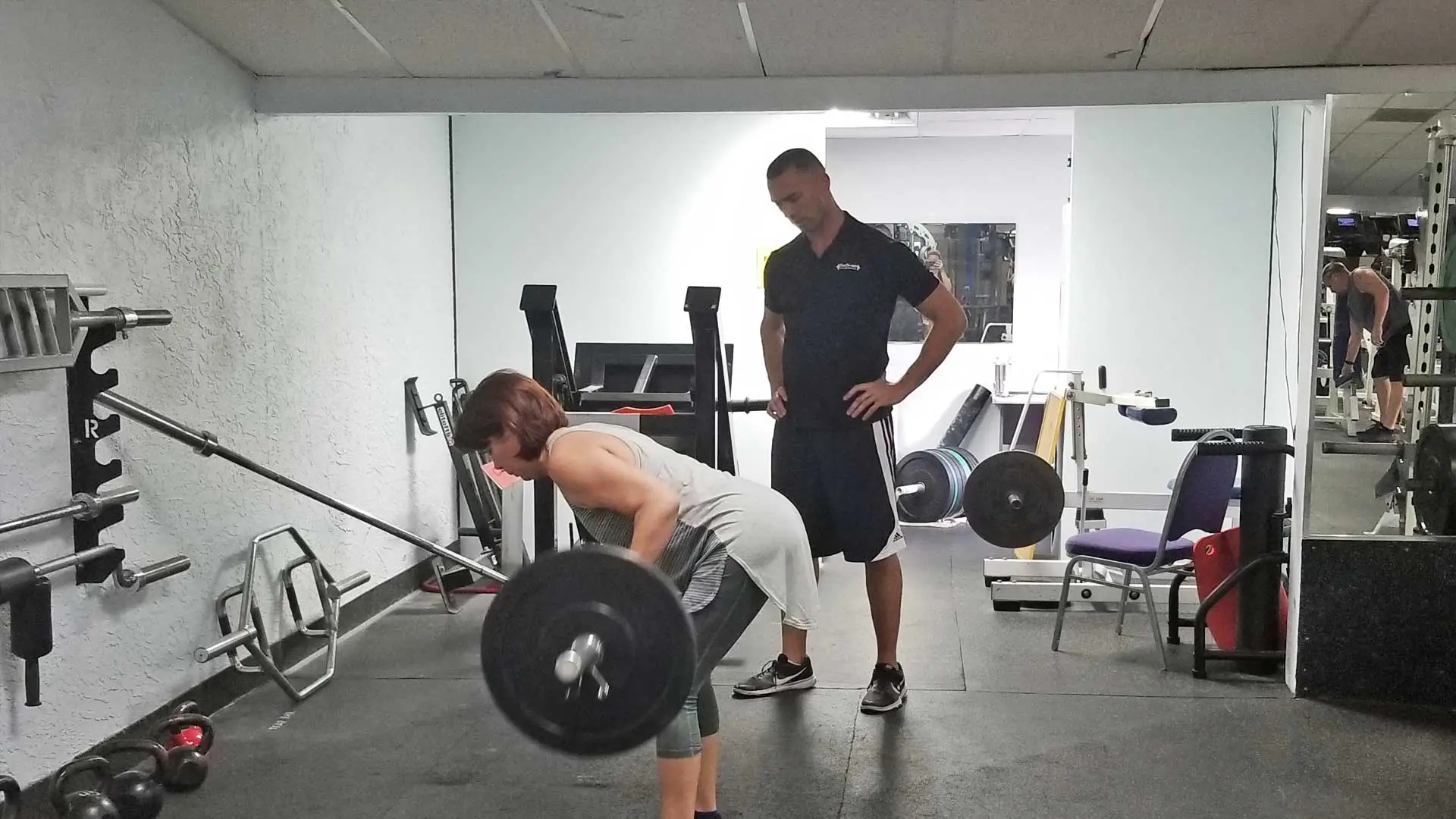
Now, you could teach yourself proper training, and there are a lot of good books written by great trainers out there, but there would still be a lot of trial and error and this could prove to be a bit disheartening for a beginner. The best way would be to find a training partner who is bigger and stronger than you, and learn from training with them. But, if that’s not possible, the next best thing is hiring a personal trainer for a month or two. You’ll learn proper form on technical free-weight movements (if the trainer is a good one) and you’ll learn programming, which is the plan you’ll follow every time you step in the gym. Those who succeed have a plan and stick to it. A steroid-using lifter can peel a banana twice a day and build huge arms from it, but do you think that would work for you? No, but working up to being able to do full push-ups and eventually full pull-ups will do wonders for your arm development.
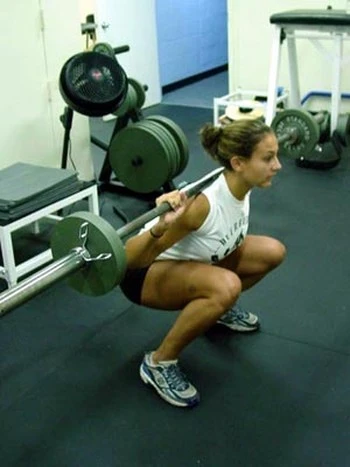
What about those leg extensions to get big legs? Unfortunately that doesn’t work for drug-free lifters either, but a steady stream of squats, lunges and deadlifts will definitely build legs that you’ll be proud to show off. The reason those steroid-using lifters don’t do the free-weight movements is most often because they just don’t know how to do them, much less teach others how to do them. So, you can pay a lot of money to a steroid-using trainer for him to show you how to use a variety of nice, shiny machines (read my article ‘Free weight are king’ to see what I think of machines), or you can hire a trainer who may not be as big but actually knows how to make you better through proper weight-training (we here at Fast Twitch fit that bill, and heck, we don’t even use supplements!).
Less Work More Results
An Argument for Weight Lifting
-
Poster Profile:
Name: Oliver
Email: oliver@fasttwitchfp.com
Age: 27
Location: Apollo Beach, FL
Position: Trainer
Sign: Leo
Bio:College educated in communication, certified through the National Strength and Conditioning Association, highly experienced and accomplished in fitness/performance training and ready to make everything on your body better.
by: Oliver posted: August 23, 2010
Cardio is difficult, but weightlifting is impossible. That’s what many believe, and yet every year lots of people purchase gym memberships and then never go to the gym. Something in the back of these people’s minds must be telling them that there’s something to this whole weightlifting thing. That or they want to be able to watch a 46” TV while pedaling on a recumbent bike that has a computer screen on it with web access.
The truth is, of all athletes, weight lifters are the lazy ones. They do as little as possible to get the job done, and it’s less than you might think. If they don’t feel like running, they don’t run. You don’t really have that choice in sports like football or soccer. Weightlifters often don’t even do any cardio if their diet is okay. As for a weightlifter’s weekly exercise regimen, it’s laughable compared to what pretty much any other kind of athlete does. In football you train every day, sometimes two or three times a day. Triathletes train everyday too, running, bike riding, swimming, as long and as hard as they can, and wearing their iPod for as much of it as possible because they’re so insanely bored by it all.
Weightlifters don’t need iPods. They don’t get bored. Their workouts are short, intense, fun and constantly changing because of the highly adaptive nature of the body. There are so many different ways to lift that, if you wanted to, you could do a new routine every two or three weeks for the rest of your life! And you’d never have to wear a speedo!
You say that you know a lady who runs 6 miles every day? Good for her! Is she psychotic? I’m not kidding, think about it for a second.
A weight-lifter who knows what he’s doing goes to the gym three days a week on average, for about 45 minutes each time. Three days a week of lifting is good enough for many professional athletes, it's considered optimal for improving athletic performance, and since form follows function, if your body starts to perform better it will also start to look better. The take-home point; if 3 times a week is good enough for professional athletes, it's good enough for you.
As we age, we begin to lose skeletal muscle, a phenomenon known as Sarcopenia. The article Sarcopenia: The Mystery Of Muscle Loss, written by Chantal Vella, M.S., states that "any loss of muscle mass is of importance because there is a strong relationship between muscle mass and strength...With aging and inactivity, the most atrophy is seen in the fast twitch (FT) fibers which are recruited during high-intensity, anaerobic movements" Atrophy is muscle loss, and the fast twitch fibers are the biggest muscle fibers in the body, they make up the vast majority of your muscle mass; and that high intensity, anaerobic stuff, that's weightlifting.
It goes beyond merely looking great in a bathing suit (which weightlifting will do), it also helps to maintain and improve your strength, and a strong body is a healthy and attractive body. In three short weight-lifting sessions a week, you're not only maintaining precious muscle mass but also building new muscle.
Now, I’m not saying that laziness is a prerequisite for being a weightlifter, there is hard work involved, just not nearly as much as people might think.
So, my question to you is, when you consider the rewards, why not lift weights?
Longevity And Quality Of Life
It's better to be envied than pitied...
-
Poster Profile:
Name: Oliver
Email: oliver@fasttwitchfp.com
Age: 27
Location: Apollo Beach, FL
Position: Trainer
Sign: Leo
Bio:College educated in communication, certified through the National Strength and Conditioning Association, highly experienced and accomplished in fitness/performance training and ready to make everything on your body better.
by: Oliver posted: June 17, 2010
Weightlifting is about longevity and quality of life. Looking good in a bathing suit is just a bonus.
Unfortunately, there seems to be a movement in America to discourage people from lifting heavy weights, or any weights at all. Doctors prescribe cardio for people who need more physical activity, diet books consider cardio the only form of exercise that exists, and TV shows like ‘The Biggest Loser’ strongly promote, you guessed it, cardio and more cardio. So where’s the weightlifting in all this? I’ll tell you, it’s not there because none of these so-called health experts know a thing about it.
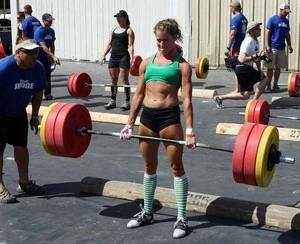
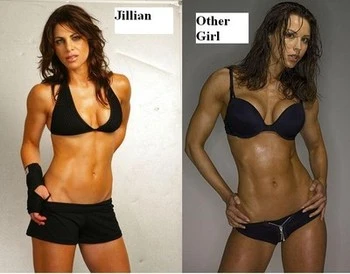
Do you think Jillian Micheals (the “star” trainer of ‘The Biggest Loser’) has a good body? If you said yes, then I agree with you, she has succeeded in attaining what many consider a “good” physique. Is it great? No, I see flaws. For one she doesn’t really have any muscle mass, she’s just thin (the other picture is of a woman who does serious weight lifting, you’ll notice she exhibits more definition and overall “tone” than Jillian). Now, I have the eye of a personal trainer and physique specialist, so I’m going to be more critical than the average person. But, if you could, wouldn’t you rather be ‘great’? (By the way, Jillian isn't a real personal trainer, she's an actor)
If, on the other hand, you do want to look like Jillian Micheals because you think she is perfect, then go ahead and do all the silly exercises they do on her tv show, also do cardio for an hour and a half a day, or more, and you’ll also need to eat a very clean diet, and do calf raises while you’re cooking, and squats while you’re watching tv. If you’re telling yourself right now that you will never do that much work each day, then you are perhaps one of the unfortunate many in America who just chooses to instead do nothing. Exercise is just too hard and you don’t have that kind of time anyways, so why even try?
Well, as Sean Hannity likes to say, “Let not your heart be troubled”. I’m here to tell you there is a better way, and as luck would have it, it’s not that hard! It’s called weightlifting, and it can make you look better than you ever imagined, with less effort than you think. Jillian Micheals is a big supporter of cardio and more cardio, and if you read my previous article on the subject you’d know that doing nothing but cardio can lead to negative results regarding your body composition.
By far the best way to make your body stronger and more attractive is through weightlifting, and more specifically functional weightlifting. The idea behind functional weightlifting is to have a functional body(strong, flexible, agile, fast) and look good for as long as humanly possible.
I'm going to warn you, if you lift weights on a consistent basis instead of just doing cardio, people will hate you, because you'll have a lean, muscular body longer than anybody else thinks is possible...but it is possible, and fun and easier than cardio.
In the end, that’s what weightlifting is all about; longevity and quality of life, and looking better than everyone else.
Common Misconceptions
If it's too hard, you're doing it wrong...
-
Poster Profile:
Name: Oliver
Email: oliver@fasttwitchfp.com
Age: 27
Location: Apollo Beach, FL
Position: Trainer
Sign: Leo
Bio:College educated in communication, certified through the National Strength and Conditioning Association, highly experienced and accomplished in fitness/performance training and ready to make everything on your body better.
by: Oliver posted: June 16, 2010
There are many misconceptions regarding weightlifting. There are those who believe that it is not necessary since the invention of Zumba-whose slogan is “Ditch the workout, join the party!” Great, if it’s a party why don’t we drink beer while we’re at it! But I digress. I would like to clear up some of these misunderstandings and hopefully make you see how absolutely essential weight-lifting is for looking good and feeling good.
Misconception #1: Weight-lifting will make you big and bulky. I’ve heard this one many times, especially from women, but even from a few men. They think that lifting weights will automatically make their muscles swell up like balloons all over their body and that they’ll look thick because of it. Well, the truth is that only fat will make you look thick, added muscle acquired through weightlifting can only make you look leaner. I’m going to guess that people who are having near-seizures every time they do a Zumba workout are doing so because they want to be leaner. Now, I didn’t say ‘thinner’, I used the word ‘leaner’ for a reason. Most people who want to improve their overall body composition (look better in a bathing suit) usually want to be lean, which is the state of having a low level of body fat, where your muscularity shows through very clearly. Brad Pitt was lean in Fight Club, not thin, and he even looked somewhat muscular despite never lifting a weight in his life, such is the power of being lean. Another good example of lean is Madonna. She isn’t bulky or overly muscular, she is just lean, and what little muscle she has is very visible because of it.
Misconception #2: Weightlifting is too hard, or too dangerous because you have to lift relatively heavy weights. Well, it’s more dangerous than sitting on your couch watching tv, but if you do too much of that you’ll eventually develop heart disease or some other ailment as a result of your inactivity. You see, life isn’t easy, you have to fight to live. Dying, on the other hand, is very easy, go ahead, change the channel. As far as it being too hard, it’s only too hard if you’re doing it wrong. Weight-lifting is fun, satisfying and extremely beneficial to your overall quality of life if you do it right. An example of doing it wrong would be just doing arm curls and leg extensions every day, 5 days a week before getting on the treadmill to run 5 miles or however far you’ve conditioned yourself to run. An example of doing it right would be going to the gym with a set plan that you would adhere to week to week, and in this plan you would work all the muscles of the body with free weights, and not just the muscles you want to bring up. Remember, the body works as one, so to be healthy and strong we need to train the entire body every week. A good way to do this is to split up your weight-lifting days into upper body days and lower body days, and you can do 2, 3, or 4 days a week for about an hour each time or less if you don’t have that much time.
Misconception #3: You have to lift weights for hours a day to get results from it. Well, the problem with that line of thinking is that it doesn’t take recovery into consideration. The body needs lots of time to recover from an intense bout of exercise if your goal is to improve. The body does adapt to a high volume of training and can survive intense training every day, but you won’t be allowing enough time for the body to recuperate and become stronger and you’ll be training with a much higher risk of injury, so you’ll be spinning your wheels and inviting injury.
Ideally, to improve athletic ability or strength, one should lift weights no more than 4 times a week, one hour at a time, and in my experience that number has been even lower, usually only 2 or 3 days a week for one hour at a time is plenty for most people if they’re training intensely. Form follows function; this means you have to improve your body’s performance in order to improve your body’s appearance, and to do so you need to give your body time to recuperate fully. So get to the gym, do what you need to do, then go home and recuperate!
Old School Weight Lifting
1) Find something heavy 2) Lift it over your head
-
Poster Profile:
Name: Oliver
Email: oliver@fasttwitchfp.com
Age: 27
Location: Apollo Beach, FL
Position: Trainer
Sign: Leo
Bio:College educated in communication, certified through the National Strength and Conditioning Association, highly experienced and accomplished in fitness/performance training and ready to make everything on your body better.
by: Oliver posted: June 06, 2010
The old timers had it all figured out, and I don’t mean Arnold Schwartzenegger, I mean Eugene Sandow, the very first weight lifter (after the Romans of course, but nobody has been able to find the stone tablets that held records of their workouts). The philosophy was simple, lift weight off the ground and put it overhead. It was simple, but not easy, which is perhaps why people stopped doing it and instead switched to using weight-lifting machines. Who can blame them? Machines are comfy, padded, require little exertion except for the specific muscle you’re targeting, and afterwards you feel like you’ve had a productive workout. Well, you haven’t had a productive workout (in my opinion anyway), but that’s another subject entirely.
The original weightlifters from the 1800’s and before didn’t have fancy gyms or nice equipment to help them build their bodies, they just had primitive barbells and dumbbells (the Romans just had stones!), and not even benches to bench press off of! And guess what, they were extremely strong human beings and their bodies showed it. They couldn’t do regular bench pressing but knew the chest was worked by horizontal pushing, so they did it on the ground, what we today call Floor Presses. They didn’t have squat racks that held a bar in mid-air for them so they could position the bar on their backs before doing heavy squats, they didn’t have anything but the weights. So what did they do? They lifted the weight off the ground! It seems strange to us today because we are so used to fully equipped gyms, but that was a much more natural way to train.
This led to the creation of the Olympic Lifts, the Power Clean, the Snatch, and the Clean and Press, all movements that demand intense focus and the entire body working as one to lift the weight off of the ground and get it over the head. Other mainstays of these weight-lifting pioneers were the Deadlift, the Military Press, Rows, and plenty of variations of these. This led to overall balanced physiques, because all of these movements required multiple muscle groups, and often times involved all of the body’s muscles! Also, there weren’t too many weak midsections among the early weight-lifters, as hoisting all that heavy weight around built a lot of core strength to brace and support all that weight.
All these natural and healthy ways of lifting went the way of the Dodo in the 1970’s when fads became a huge part of the exercise and fitness world, and plenty of silly diets followed. That trend unfortunately continues today, but we should look back to our founding fathers of iron and learn from them. Granted, we don’t need to train in as primitive a fashion as the old-timers, they did so because they had no choice; we now have more sophisticated equipment when it comes to free weights and we should take advantage of it. As Dan John, an Olympic athlete in the discus and Olympic lifts, likes to say, “I said it was simple, not easy.”

_t.jpg)
_t.jpg)

_t.jpg)
_t.jpg)
.jpg)
.jpg)
.jpg)
.jpg)
.jpg)
.jpg)
.jpg)
.jpg)
.jpg)
.jpg)
Comments [0]
Add Comment
Permalink